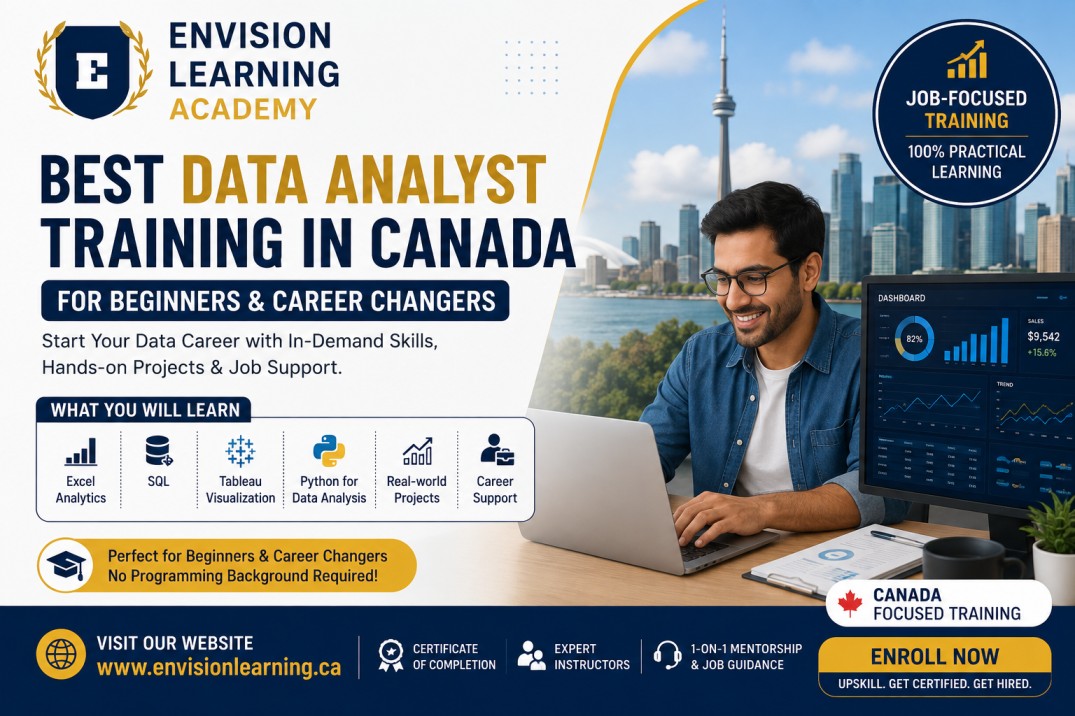
Best Data Analyst Training in Canada for Beginners and Career Changers
Ready to turn numbers into a new career? If you’ve been searching for the right Data Analyst Course, comparing options for Data Analytics Training in Canada, or wondering whether a Data
Ready to turn numbers into a new career? If you’ve been searching for the right Data Analyst Course, comparing options for Data Analytics Training in Canada, or wondering whether a Data Analyst Certification is really worth it, you’re in the right place. The data field is growing fast, companies across every industry need people who can read data and turn it into decisions, and you don’t need a computer science degree to break in. You just need the right training, the right mentors, and a plan that actually leads to a job.
Why Data Analytics Has Become One of Canada’s Hottest Careers
Every company is now a data company. Banks, retailers, hospitals, and tech firms across Toronto, Mississauga, Brampton, and beyond are collecting more data than ever, and they need people who can turn spreadsheets into strategy. Job boards are flooded with openings for data analysts, business intelligence specialists, and reporting analysts, often with salaries that beat many entry-level tech roles. This demand is exactly why so many beginners and career changers are looking for structured training instead of trying to learn everything alone through scattered YouTube videos.
What Makes a Great Data Analyst Course Worth Your Time
Not all courses are created equal. A strong program should go beyond theory and get you working with real tools like Excel, SQL, Power BI, and Tableau on projects that mirror actual workplace tasks. Look for small class sizes, instructors who have worked in the industry, and a curriculum that builds from the basics of data cleaning all the way to dashboards and storytelling with data. The best programs also weave in soft skills like presenting findings clearly, since employers care as much about communication as they do about formulas.
Core Skills You’ll Build in Structured Data Training
This is where the real transformation happens. A well-rounded program in data skills will typically cover data collection and cleaning, writing SQL queries to pull information from databases, building visual dashboards, and applying basic statistics to spot trends. You’ll also learn how to present insights to non-technical stakeholders, which is often the skill that separates a hireable analyst from someone who just knows software. By the end, you should be comfortable taking a messy dataset and turning it into a clear, decision-ready report.
Do You Actually Need a Certification to Get Hired?
Here’s the honest answer: it depends on what the certificate represents. A piece of paper alone rarely gets anyone hired, but a credential backed by a solid portfolio, hands-on projects, and interview preparation absolutely helps you stand out. Hiring managers want proof you can do the work, not just that you sat through lectures. That’s why the strongest training programs combine a certificate with real project experience, resume building, and mock interviews, so the credential actually reflects job-ready ability rather than attendance.
Beginner or Career Changer? Choosing the Path That Fits You
Your starting point should shape your training plan, not the other way around. Complete beginners usually benefit from a slower, foundation-first pace covering spreadsheets and basic logic before moving into SQL and visualization tools. Career changers, on the other hand, often already have transferable skills like project coordination, finance, or customer service, and can move faster through fundamentals to focus on portfolio projects and interview readiness. A good program should be flexible enough to meet you where you are, rather than forcing everyone through the exact same pace.
Career Opportunities Waiting After You Finish Training
Data skills open more doors than most people expect. Graduates often move into roles such as junior data analyst, reporting analyst, business intelligence analyst, or operations analyst, with many companies open to hiring analysts who don’t have a traditional STEM background as long as they can demonstrate practical skills. Industries hiring heavily include banking, retail, telecom, healthcare, and logistics, all of which rely on data to run day-to-day operations. With the right training and a solid portfolio, many career changers land their first analyst role within a few months of completing a structured program.
Why So Many Learners Choose Envision Learning Academy
Training is only as good as the support behind it. Envision Learning Academy focuses on hands-on, instructor-led learning using the same tools professionals use on the job, paired with resume support, mock interviews, and job placement guidance so the learning doesn’t stop at the last class. For beginners and career changers who want structured mentorship rather than a self-paced course they might abandon, that combination of practical training and real career support is often what makes the difference between finishing a program and actually landing a job.
Frequently Asked Questions
-
How long does it take to become a data analyst in Canada?
Most structured programs take a few months to complete, and many learners land entry-level roles within three to six months of finishing their training, depending on prior experience and how actively they apply.
-
Do I need a degree to become a data analyst?
No formal degree is required for most entry-level roles. Employers increasingly value hands-on skills, portfolio projects, and practical certification over a specific academic background.
-
What tools should a beginner learn first?
Excel and SQL are the best starting points, followed by a visualization tool like Power BI or Tableau once you’re comfortable pulling and cleaning data.
-
Is data analytics a good career for career changers in Canada?
Yes. Many career changers from finance, admin, retail, and customer service backgrounds successfully transition into analyst roles because their existing communication and problem-solving skills transfer well.
-
What is the average salary for a data analyst in Canada?
Entry-level analysts typically start in a solid range that grows quickly with experience, and salaries vary by city, industry, and the specific tools or certifications an analyst holds.
-
Can I learn data analytics online in Canada?
Yes, many programs now offer live online classes with instructor support, making it possible to train from anywhere in the country while still getting hands-on guidance.
-
What is the difference between a data analyst and a data scientist?
Data analysts focus on interpreting existing data to answer business questions and build reports, while data scientists typically build predictive models and work more heavily with programming and advanced statistics.
If you’re serious about starting or switching into a data career, the most important step is choosing training that combines real tools, real projects, and real career support, so what you learn in class actually turns into a job offer.
Analyst Certification is really worth it, you’re in the right place. The data field is growing fast, companies across every industry need people who can read data and turn it into decisions, and you don’t need a computer science degree to break in. You just need the right training, the right mentors, and a plan that actually leads to a job.