
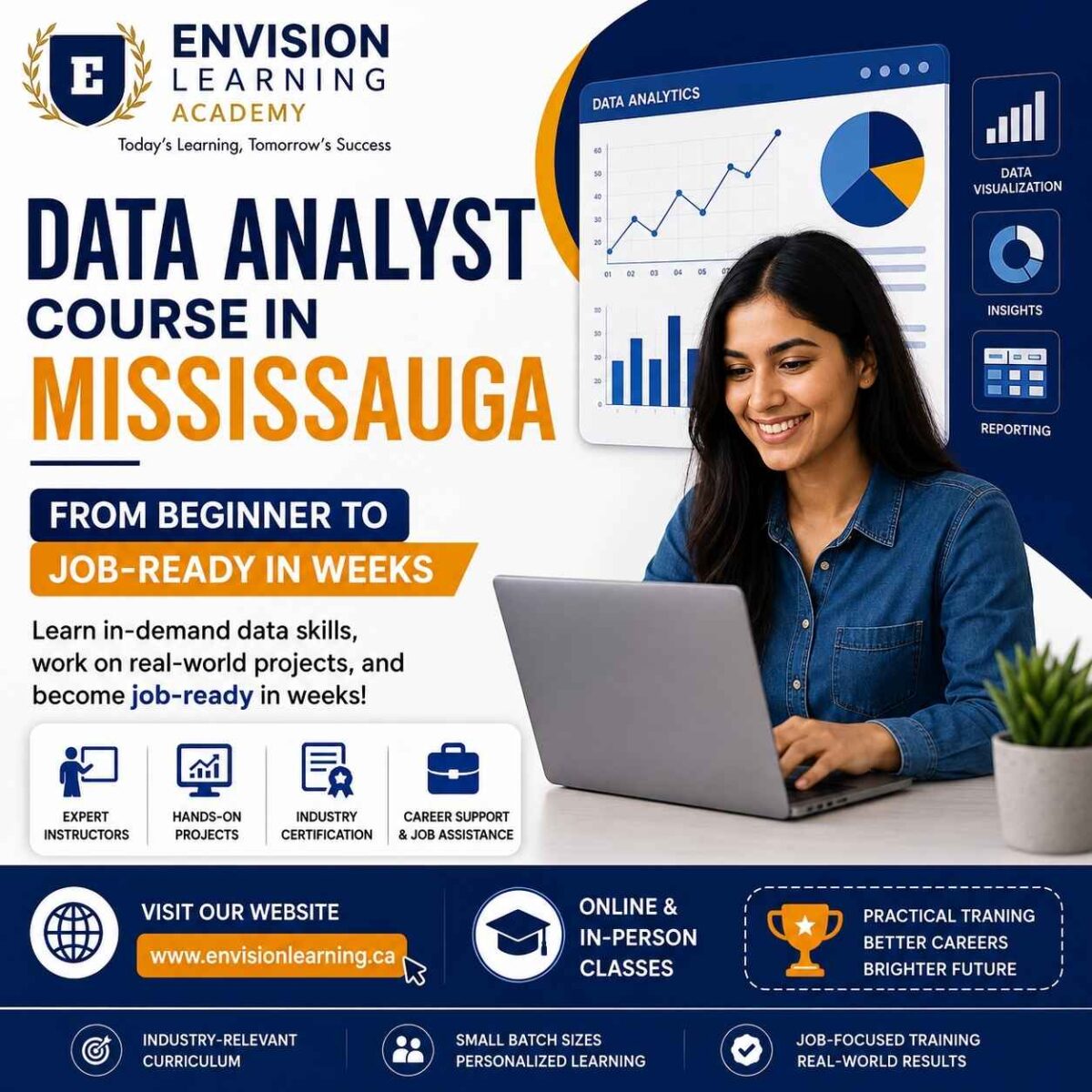
Data Analyst Course in Mississauga Become Job-Ready Fast
Ever looked at a job posting for a Data Analyst role and felt both excited and a little lost? You’re not alone. Every day, more people across Ontario are asking the same question: how do I actually break
into data analytics without a computer science degree or years of coding experience?
The good news is that a career switch into data analytics is more realistic than most people think. Companies today are drowning in data and desperately need people who can turn numbers into decisions. You don’t need to be a math genius or a tech wizard. You need the right training, the right tools, and someone to guide you through it step by step.
That’s exactly where a structured Data Analyst Course in Mississauga comes in.
Why Mississauga Is Becoming a Hotspot for Data Careers
Mississauga sits right in the heart of the Greater Toronto Area, surrounded by some of Canada’s biggest employers in finance, logistics, healthcare, and technology. Companies here are actively hunting for people who can read spreadsheets, build dashboards, and make sense of business numbers.
This growing demand has made local, hands-on training incredibly valuable. Instead of learning theory from a textbook, students in Mississauga get access to instructors who understand exactly what local employers are looking for.
What Does a Data Analyst Actually Do?
Before jumping into any training program, it helps to understand the day-to-day reality of the job. A data analyst usually spends their time:
- Collecting and cleaning messy data from multiple sources
- Building reports and dashboards using tools like Excel, SQL, and Power BI
- Spotting patterns and trends that help businesses make smarter decisions
- Presenting findings to managers or teams in a simple, clear way
It’s less about complicated math and more about curiosity, problem-solving, and communication. That’s why so many career changers — from customer service reps to accountants to fresh graduates — are drawn to this field.
The Power of Structured Data Analytics Training
Trying to learn everything on your own through YouTube videos and free tutorials can feel overwhelming. There’s no clear roadmap, no one to ask when you’re stuck, and no way to know if you’re actually learning the right skills employers want.
This is exactly why Data Analytics Training through a guided program makes such a big difference. A well-designed course gives you:
- A clear, step-by-step curriculum instead of scattered information
- Hands-on practice with real datasets, not just theory
- Feedback from mentors who’ve actually worked in the industry
- A structured timeline so you’re not stuck “learning forever” with no end date
Instead of guessing what to study next, you follow a proven path that takes you from complete beginner to confident data professional.
Why Certification Still Matters in 2026
Some people wonder if certificates even matter anymore. The honest answer is: yes, especially when you’re trying to break into a new field. A Data Analyst Certification Course does two important things.
First, it proves to employers that you’ve completed structured, verified training — not just watched a few random videos online. Second, it gives you a portfolio-ready credential you can showcase on your resume and LinkedIn profile, which matters a lot when recruiters are scanning hundreds of applications.
Certification alone won’t land you a job, but combined with practical skills and real project experience, it becomes a powerful tool that sets you apart from other candidates applying for the same role.
What Makes a Program Truly “Job-Ready”
Here’s the truth: finishing a course and being job-ready are two very different things. Plenty of programs teach you tools but leave you clueless about how to actually use them in a real interview or workplace setting.
A genuine Job-Ready Data Analyst Program goes beyond just teaching software. It should include:
- Real-world projects that mimic actual business problems, not just practice exercises
- Resume and LinkedIn profile support tailored specifically for data roles
- Mock interviews so you walk into the real thing with confidence, not nerves
- Career mentorship from people who’ve actually worked in the industry and know what hiring managers are looking for
This is the difference between simply “knowing” data analytics and being genuinely prepared to perform the job from day one.
From Complete Beginner to Confident Analyst: What the Journey Looks Like
Most successful students follow a similar path, even if they start with zero technical background.
Weeks 1–3: Building the Foundation You start with the basics — Excel functions, data cleaning techniques, and an introduction to how businesses actually use data. This stage builds your confidence and gets you comfortable working with numbers.
Weeks 4–6: Learning the Core Tools This is where SQL and Power BI (or similar tools) come into play. You start writing queries, building dashboards, and visualizing data in ways that actually tell a story.
Weeks 7–9: Real Projects and Portfolio Building Instead of theoretical exercises, you work on projects that mirror real business scenarios — sales trends, customer behavior, operational efficiency — the kind of work you’d genuinely be doing in a job.
Final Weeks: Interview Prep and Job Search This last stretch focuses on polishing your resume, practicing interview questions, and learning how to talk confidently about your projects with hiring managers.
By the end, you’re not just someone who “took a course.” You’re someone who can walk into an interview and speak the language of data with genuine confidence.
Tips to Get the Most Out of Your Training
If you’re serious about making this career change work, keep these things in mind:
- Practice consistently. Even 30 minutes a day of hands-on practice beats a single long study session once a week.
- Don’t skip the projects. Employers care far more about what you’ve built than what you’ve memorized.
- Ask questions early. Confusion left unresolved tends to snowball, so speak up the moment something doesn’t make sense.
- Network as you learn. Connect with instructors, classmates, and local professionals — many opportunities come through people, not job boards.
Frequently Asked Questions
- How long does it take to become a data analyst with no experience?
Most beginners can become job-ready in a few months of consistent, structured training. It depends on how much time you can dedicate each week, but a well-paced program typically runs anywhere from two to four months.
- What skills do I need before starting a data analyst course?
You don’t need any prior technical background. Basic computer literacy and comfort with Excel is helpful, but everything else — SQL, Power BI, and analytical thinking — is taught from the ground up.
- Is a data analyst career in demand in Canada right now?
Yes. Businesses across Canada, especially in the GTA, continue to hire data analysts across finance, retail, healthcare, and logistics sectors as companies increasingly rely on data-driven decision-making.
Final Thoughts
Switching careers can feel intimidating, but data analytics remains one of the most accessible and rewarding paths into the tech industry today. With the right structured training, hands-on projects, and career support, going from complete beginner to job-ready professional is absolutely achievable — often faster than people expect.
If you’re ready to take that first step with a program built around real skills, real projects, and real career outcomes, Envision Learning Academy offers the guidance and mentorship to help you get there with confidence.
Explore related articles:
Data Analyst Training Toronto with Certification and Job Placement
Best Data Analyst Training with Certification and Career Support