
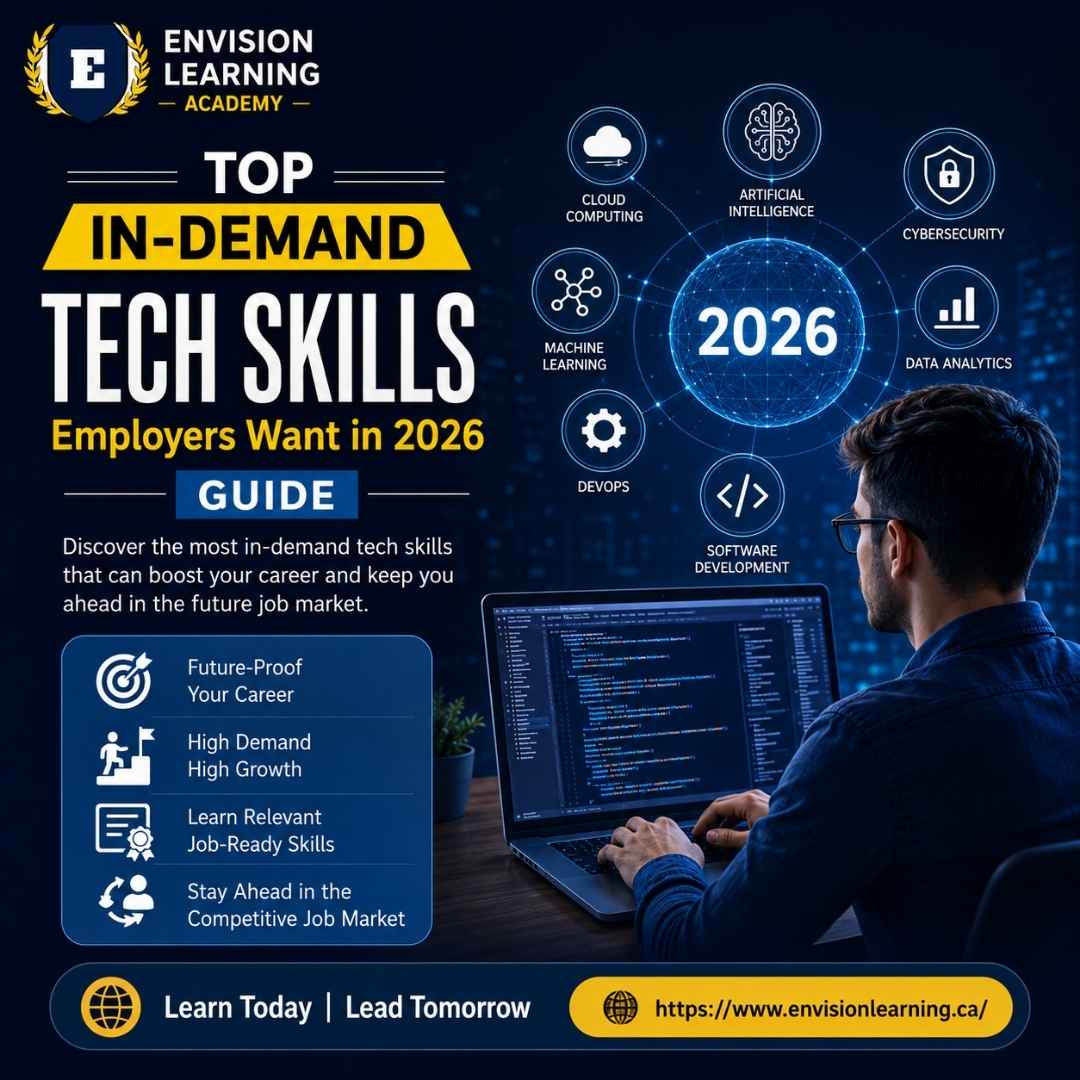
The Tech Job Market Is Changing Fast — Are You Ready?
The tech industry never stands still, and 2026 is proving to be one of the most transformative years yet. Employers across Canada and around the world are actively searching for professionals who
understand the In-Demand Tech Skills 2026 landscape and can apply it in real business settings. Whether you’re a fresh graduate, a career switcher, or someone looking to move up the ladder, understanding which skills are worth your time is the difference between chasing job postings and having recruiters come to you.
This guide breaks down the Future Tech Skills shaping hiring decisions this year, why they matter, and how you can start building them today — even if you’re starting from scratch.
Why Tech Skills Matter More Than Ever in 2026
Automation, artificial intelligence, and cloud-first business models have completely rewritten what companies expect from their workforce. A degree alone no longer guarantees a job offer. Employers want proof that candidates can solve real problems using current tools and platforms. This is exactly why the Most In-Demand IT Skills conversation has shifted from “nice to have” to “must have” on almost every job description.
Canadian companies — from banks in Toronto to healthcare providers in Mississauga and tech firms in Vancouver — are hiring for hybrid roles that blend technical know-how with business understanding. That means a single skill set is rarely enough anymore; employers want well-rounded professionals.
The Rise of Hybrid Tech Roles
Gone are the days when IT roles were siloed into strict categories like “developer” or “tester.” Today’s job market rewards people who can wear multiple hats — someone who understands data, can communicate with stakeholders, and knows how to test and validate systems before they go live. This blending of skills is one of the biggest hiring trends employers are chasing in 2026.
Top In-Demand Tech Skills Employers Want in 2026
Let’s get into the specifics. Below are the skill categories consistently showing up in job postings, salary reports, and hiring forecasts this year.
- Data Analysis and Business Intelligence
Every company today runs on data — but data is only useful if someone knows how to interpret it. Business Analysts and Data Analysts who can turn raw numbers into actionable insights are landing some of the Tech Skills for High Paying Jobs available right now. Familiarity with tools like SQL, Power BI, Tableau, and Excel remains essential, and employers increasingly want analysts who understand how to translate findings into strategic decisions.
- Quality Assurance and Software Testing
As companies push products out faster, quality control has become non-negotiable. QA professionals who understand manual testing fundamentals along with automation frameworks are in high demand. Test automation skills using tools like Selenium, Cypress, and API testing platforms are especially valuable, since they help companies catch bugs before customers ever see them.
- Cloud Computing and Infrastructure
Cloud platforms like AWS, Azure, and Google Cloud continue to dominate hiring conversations. Businesses are migrating legacy systems to the cloud at record speed, and they need people who understand deployment, security, and cost management within these environments.
- Artificial Intelligence and Machine Learning Literacy
You don’t need to be a data scientist to benefit from AI knowledge. Employers now expect professionals in almost every tech-adjacent role — from analysts to project coordinators — to understand how AI tools can improve workflows, automate repetitive tasks, and support better decision-making.
- Project and Agile Management
Certifications like PMP and Scrum Master remain some of the most searched-for credentials because they prove a candidate can lead teams, manage timelines, and deliver results under pressure. Agile methodology, in particular, has become the standard way software teams operate, making Scrum knowledge a near-requirement for leadership-track roles.
- Cybersecurity Awareness
With data breaches making headlines regularly, companies want employees at every level who understand basic cybersecurity hygiene — not just dedicated security teams. This includes secure data handling, awareness of phishing tactics, and compliance basics.
Future Tech Skills That Will Define the Next Five Years
Looking beyond 2026, a few emerging skill areas are expected to grow even further in demand:
- AI prompt engineering and tool integration for non-technical roles
- Low-code/no-code platform development for faster product builds
- Data privacy and compliance expertise, especially with evolving regulations
- Cross-functional communication skills that bridge technical and business teams
Professionals who start building these Future Tech Skills now will have a serious head start when hiring picks up in these areas.
How to Build These Skills Without Starting From Zero
The good news? You don’t need a computer science degree to break into tech. Many of today’s most successful Business Analysts, QA Testers, and Data Analysts came from completely unrelated fields — retail, hospitality, education, and more. What matters is structured, practical training that mirrors what real IT teams do daily.
Here’s a simple roadmap:
- Pick a specialization that fits your strengths — analytical thinkers often thrive in Data Analysis or Business Analysis, while detail-oriented individuals excel in QA.
- Learn the tools employers actually use, not just theory. Hands-on practice with real software makes all the difference in interviews.
- Build a portfolio or resume that shows applied skills, not just certificates.
- Prepare for interviews by practicing common technical and behavioral questions specific to your target role.
- Network within your local job market, especially in cities with strong tech hiring activity like Toronto, Mississauga, and Brampton.
Why the Canadian Job Market Is a Great Place to Start
Canada’s tech sector continues to expand steadily, with major hubs in Toronto, Vancouver, and Ottawa driving consistent hiring across banking, healthcare, retail, and telecom industries. Government support for skills training, immigration pathways for tech talent, and a strong demand for bilingual professionals make Canada an especially attractive market for anyone building a tech career in 2026. Local companies are actively looking for trained Business Analysts, QA Testers, and Data professionals who understand both the technical and business side of operations.
Final Thoughts: Start Building Your 2026 Tech Career Today
The tech hiring landscape in 2026 rewards professionals who combine practical skills with real-world application. Whether your goal is landing one of the Tech Skills for High Paying Jobs or simply future-proofing your current role, the key is consistent, hands-on learning paired with a clear career roadmap.
Get Trained by Industry Experts at Envision Learning Academy
If you’re ready to move from learning about these skills to actually building them, structured, instructor-led training makes all the difference. Envision Learning Academy offers hands-on courses in Business Analysis, Data Analysis, QA and Test Automation, PMP, and Scrum Master certification — designed by instructors with real industry experience, along with resume support and job placement guidance to help you turn your new skills into an actual career.
Frequently Asked Questions
- What are the most in-demand tech skills in Canada right now?
Data analysis, QA/software testing, cloud computing, cybersecurity awareness, AI literacy, and Agile/Scrum project management are currently the most sought-after skills among Canadian employers.
- Do I need a degree to get a tech job in 2026?
No. Many employers now prioritize practical, hands-on skills and certifications over traditional degrees, especially for roles like Business Analyst, QA Tester, and Data Analyst.
- Which tech skill pays the highest salary in 2026?
Cloud computing, AI-related roles, and senior Business Analyst positions tend to offer some of the highest salaries, particularly for professionals with certifications and hands-on project experience.
- How long does it take to learn a new tech skill?
Most focused training programs, such as QA or Business Analyst courses, can be completed in a few months with consistent, hands-on practice.
- Is it too late to switch careers into tech in 2026?
Not at all. Many successful tech professionals switched careers later in life by completing targeted training programs and building practical, job-ready skills.
- What tech skills are best for beginners with no experience?
Business Analysis and Quality Assurance are excellent starting points since they combine analytical thinking with practical tools, and don’t require prior coding experience to get started.
Explore related articles: